AI devalues execution.
Value migrates to judgement.
Thoughts and good practices: AI at work, what is worth automating, and what is not.
Writings
Points of interest

Anthropic markets its Max 20x subscription as "twenty times" the usage of the Pro plan. A class action filed in California in June 2026 (Kahn v. Anthropic) claims the multiplier only applies to five-hour sessions: with the weekly limits factored in, actual usage would be closer to six to eight times Pro. No ruling has been issued yet, but late August brought a new episode: Anthropic announced that the temporary +50% boost on Claude Code weekly limits ends September 14, replaced by a permanent +25%. Framed as an increase, experienced by subscribers as a 17% cut in their actual capacity. The lesson applies today: in a professional setting, a marketing multiplier is not a guaranteed capacity. Before sizing a workflow or a budget on an AI subscription, measure the real quota against your own workload, and plan for the provider tightening it overnight.
RÉDACTION     Ludovic
TRADUCTION    Claude-Fable-5
CORRECTION    Claude-Opus-5
IMAGE         GPT-Image-2
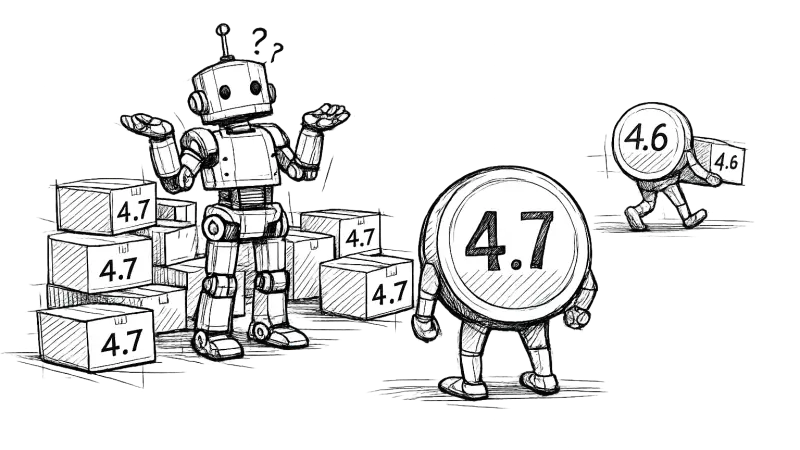
Gas Town, Steve Yegge's agent system, ran flawlessly on Opus 4.6. Moving to 4.7 made it unusable: the model kept proposing "just two more things" instead of doing the work. A simple version change can be enough to bring an agent workflow to a halt. In a professional setting, that is exactly why you harden these workflows, test the model's behavior on every upgrade, and never assume a newer version is automatically "better".
WRITING       Ludovic
IMAGE         Claude Opus 4.7
PROOFREADING  Claude Opus 4.6

A small tool from OpenAI to visualize how text is split into tokens — the unit models read, and the one you pay for. Paste the same sentence in French and then in English: the difference is striking.
TROUVÉ PAR    Moi
IMAGE         GPT-Image-2
CORRECTION    Claude-Fable-5